Playground
Web3 Events Platform

Overview
Playground set out to build the ultimate portal for connecting web3 and cultural events, clubs, and influencers across a single mobile and web app. They had been working on the admin and event management tool but hadn't cracked the design or entire product. I stepped in to overhaul the design system, lead the branding agency relationship, and build simpler, more efficient flows for users and creators.
Problem
To build a community that relied on web3 tokens, community-managed operations (similar to a DAO), and public event ticketing meant a lot of data and information architecture. There was a high risk of too much complexity and not going deep enough.
Key challenges:
- The app could rotate around many entities: people, communities, events, or categories/interests
- Users needed clarity on whether the product was community-first or event-first
- Web3 onboarding created friction for mainstream users
- Questions arose such as "If I join a community do I always get notified of their events?" and "If I RSVP for an event do I have to become a part of that community?"
Goals
- Determine the core organizing principle for the app (communities vs events vs people)
- Reduce web3 onboarding friction for Gen-Z users
- Create clear relationships between people, communities, and events
- Build a design system that could support the mobile app, web app, and marketing materials
- Make the experience fun and engaging while handling complex DAO-style operations
Process
My first step was to deconstruct what they had so far and assess the problems that had arisen or were on their way. From there, I took the key whys—register for an event, buy a ticket, talk to my fans, join a community, create a token—and prioritized their function and relationships.
Grouping them together, we found that the app could rotate around many entities: people, communities, events, or categories/interests. They could all be present as facets, but only one could be the core offering. We determined it was communities and then built a Community>Admin model that would keep the spirit of a DAO but allow things to remain focused.
As testing progressed, it became clear that community activation was happening around IRL events, or at least virtual events that were happening at a set place (even if it was Twitter Spaces) and time. Activation and engagement needed a catalyst and a thing to do was that catalyst.
Solution
Events Took the Wheel Two key changes arose: smart filter and equal footing for users and communities. It wasn't working to have a user belong to a single community if they were an admin. Communities had to own events, not individuals. Individuals wanted to share both events that they attended and that they organized with equal footing. So we overhauled the display model and made it clear that a community and a person are different, but an event is always the same.
Events can be owned by anyone and communities can attend events. The lines were crossing in the right ways and the paths were getting clear.
Only Use Forms When Necessary Quite often—whether it's Facebook Groups or Eventbrite—everything goes into a form. There's no fun way to fill things in. We tried our hand at a few novel drag and drop event builders, but kept coming back to forms for the text-heavy stuff, like starting a community. Where we could, we removed forms and used progressive movement through short screens (much better for the mobile app) to keep the experience quick and concise.
Designed to Grow A full design system and design library was built for the in-house team to use. We tested landing pages and design standards with the brand team to make sure that the UI and product experience closely matched the marketing experience.
Community management was the first thing to tackle, ensuring that it was simple and easy to understand, not unlike a Facebook group or Slack channel, but much more fun.
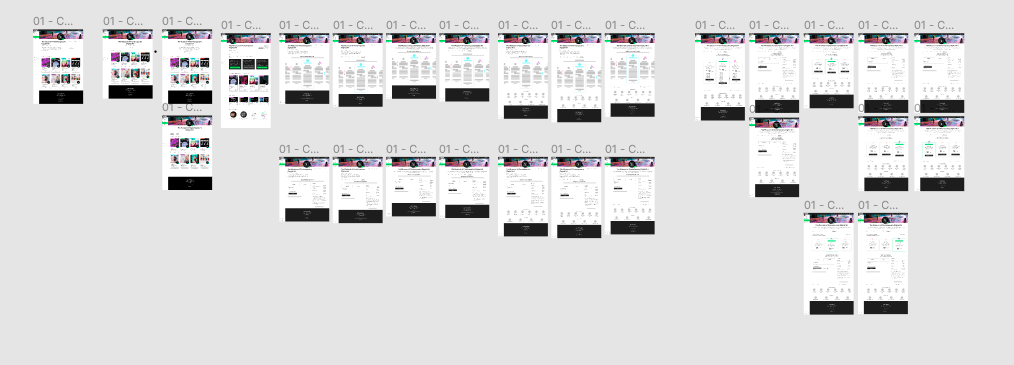
Finding Our Flow We spent weeks grouping, testing, and diagramming views to ensure it was easy to know where you were and where you had come from without clunky navigation. The Gen-Z target for this app needed something easy and that would translate well to the native mobile app, which was on the way after beta.
Result
Playground is growing and finding its footing. Press in TechCrunch, The Verge, and throughout the tech industry has driven interest to this novel platform for engaging via web3 with the people and communities you love. The platform successfully pivoted from a community-first to an event-first model, reducing friction and driving engagement.
Gallery